Wednesday, September 29, 2010

Locker Lambs Available

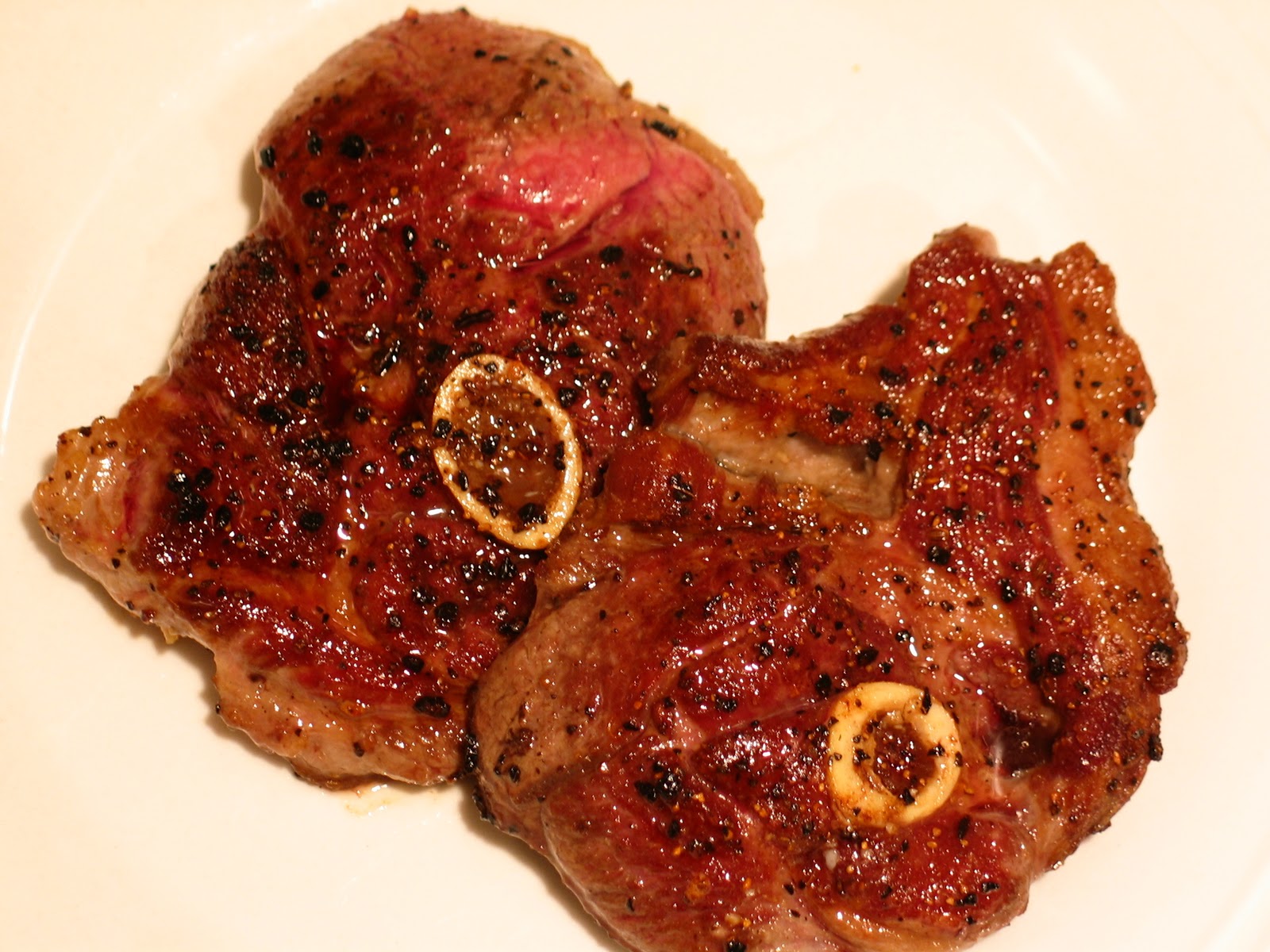
This is it! For just a few weeks out of the year, we have locker lambs available for sale to Virginia buyers who want fresh, local, humanely raised meat.


Icelandic lamb is lean, mild, and delicious, with none of that “gamey” flavor often found in commercial lamb. The breed’s modest size is perfect for modern families who often don’t have freezer space to store a large amount of meat.

The October 2009 issue of Saveur magazine said, “Free-range, grass-fed Icelandic lamb is exceptionally fine grained and mild tasting; it is prized by chefs….”

In the March 2010 issue of Food & Wine magazine, Robert Wiedmaier, chef-owner of Marcel’s and Brasserie Beck in Washington, DC, is quoted as saying, “Icelandic lamb is the best I’ve ever tasted. It’s a very pure, nonfatty meat.”

We send lambs to slaughter in early-to-mid October. At this time, they are about 4-6 months old and weigh about 40-80 lbs. Each one typically yields 20-40 lbs. of packaged meat, cut to your specifications (chops, roasts, ground lamb, stew meat). 

Due to this summer's severe heat and drought conditions, most of this year's available lambs are on the lower half of those weights, but even so, our prices are very reasonable.

Our price is $70 per lamb, including delivery to our local butcher. The butcher then charges $70 to process each lamb, including cutting, packaging, and freezing.

The butcher is only a 10-minute drive from our farm, so the lambs don’t have to endure the stress of a long, arduous trip.

Our supply of locker lambs is extremely limited. Once they are gone, there will be no more until next year.  If you're interested--or if you have any questions--contact me soon before they're all gone.

Tuesday, September 28, 2010

Guinea Hog Piglets (1 Month Old)

The piglets are growing SO fast!  I took some time to get some photos of them today, to show how much they've changed.  Look at those cute little faces and fat little bodies!

A few of the male piglets are still available for sale.  We're asking $200 per piglet.  They'll be ready to go in mid-late October.


Compare this one to the photos of them nursing when they were first born.  They're so much bigger now!


 It takes a lot of milk to feed nine hungry piglets, but Cerridwen is doing a great job, especially considering she's a first-time mom.


I also took a little video footage of the piglets:


And some footage of Jack and Circe playing with a tarp:

Friday, September 3, 2010

Piglets: One Week Old Today!

Happy one-week birthday, little Guinea hog piglets!

They are so fat and glossy, and growing so fast.  We did lose one of the females when mom accidentally sat on her in the bedding.  But the rest---3 girls and 6 boys---are doing great.  They look like a herd of tiny, short-nosed elephants marching around in a jungle made out of bushes.

They're so busy running around, it's hard to keep them still long enough to take any good pictures, but here are a few I captured this week.  Can you think of anything cuter than this?


We had quite a large waiting list of people who had inquired about buying piglets, so most of these babies are already spoken for, and I'm confident the others soon will be.  In a couple of months, they'll get to go off to other farms and when they're old enough, they'll help continue to preserve this very rare and special breed of pig.

I think that our other pair of pigs, Circe and Jack, had their first successful breeding yesterday.  If so, we should be expecting our next batch of piglets right after Christmas.

Friday, August 27, 2010

Newborn Guinea Hog Piglets!

Yesterday, shortly before sunset, our pregnant Guinea hog sow Cerridwen started nesting, panting, and acting restless.  This morning she gave birth to TEN piglets, all alive and nursing.  She did a great job!  That's a big litter for a first-time mom in a breed where the average litter size is six.

Since American Guinea hogs are a critically endangered breed, I feel pretty good about our farm helping to boost the world population with such a nice big litter of healthy babies.


There are four girls and six boys.  At least one boy and one girl have white feet like their mom.

The births are very easy, and the newborn piglets immediately get up and climb straight over to the nearest teat to start nursing, without any help.  Amazing!


Cerridwen is being a great mom so far.  She's alert when the babies squeak and is being careful not to squish any of them, but she doesn't mind if I handle the little ones, so long as I don't make them cry.

The babies all have strong, compact, warm little bodies, and shiny black fur.  They are making almost no noise at all right now, but I expect that will change in a couple of days, once they start running around exploring.


Here's a video of the piggies, just a few minutes old:

Thursday, August 26, 2010

Quilt Project, Part 2: Fiber Preparation

As I mentioned in an earlier post, I'm making a handspun, handwoven quilt for a customer, doing all the steps myself, from sheep to finished product.

After finalizing the design and selecting which fleeces I will use, the next step is to prepare the wool for spinning.  This is the most time-consuming and tedious of all the steps, but it's crucial, because the wool doesn't exactly come off the sheep all clean and ready to spin. 

Sheep live outside.  They lie down on the ground.  They rub up against trees.  They stroll through patches of tall grass and weeds.  So naturally, their wool picks up some dirt and debris:  seeds, twigs, bits of chaff, dust, thorns, etc.  The same lanolin in the wool that helps protect the sheep from the weather also helps small bits of debris stick to the fleece. 

So, it's important to prep the fiber thoroughly to remove all the debris, so none of it ends up in the final product.

For the past few days, I've been working on preparing Urbana's lamb fleece, which is truly luscious.  Very soft and rich, with a beautiful luster.  Here's what it looked like while Urbana was still wearing it.  This photo was taken about a month before she was sheared.  From a distance, she looks pretty clean, right?


This is what the fleece looked like after it was sheared.  If you look closely, you can see all the little bits of VM (vegetable matter) that are caught in the wool.


Picking out all the VM is a tedious, time-consuming task, that requires a lot of patience and attention to detail.  Each individual lock of wool, out of an entire garbage bag full of fleece, must be examined. 

I grasp each lock by the outer ends, give it a good shake to dislodge any second cuts (small bits of wool that were accidentally cut short on shearing day), then spread the fibers out and pick out any debris, from burrs or thistle pods all the way down to tiny flecks of dirt that are smaller than the head of a pin.  Sometimes I hold the tuft of wool up to the light to check for debris I have missed.  Sometimes I lay the tuft against my leg and brush it with a flick carder to dislodge the last few crumbs.

It took me three afternoons of picking VM to completely clean Urbana's fleece.  (Last time I cleaned a fleece, I tried washing it first, then picking out the VM.  Doing it that way took much longer.)  If we had a nice, weed-free, manicured pasture, our fleeces would start out a bit cleaner.  But we're not there yet, so for now I spend a little extra time in the fiber prep stage. 

Here's what Urbana's fleece looked like when I was done.  Much cleaner!


Here is the bucket of second cuts, VM, and dirty wool that I discarded.  Nobody would want all this stuff in their quilt!


Now the wool is ready for washing.  I've already written a post about how to wash a fleece, so I won't repeat myself here.  But to continue to track the process of this quilt, here's a photo of Urbana's fleece soaking in the wash water.  That fleece looked pretty clean, didn't it?  But see how brown the wash water becomes?  I only picked out the visible flecks of debris.  Now the soapy wash water will remove the dust, sheep sweat, and lanolin.


Here is the washed and rinsed wool, still wet, laid out on the drying rack in front of the fan.  By tomorrow it will be dry and ready to card.  See how much whiter it is now?  And how the beautiful natural sheen of the wool is starting to show through?


But wait!  What's this?  Even after all the time I spent picking debris out of the wool, now that it's clean and white, suddenly thousands more teeny tiny specks of debris have become visible, where they weren't visible before.

No need to worry.  The washing has removed the sticky lanolin from the fleece.  Once the wool is dry, most of the remaining impurities will fall off naturally when I card the wool.  Any truly stubborn bits that remain after that can be picked or brushed loose as I handle the wool before spinning.

Stay tuned for Part 3!
Monday, August 23, 2010

Four Days to Piglets

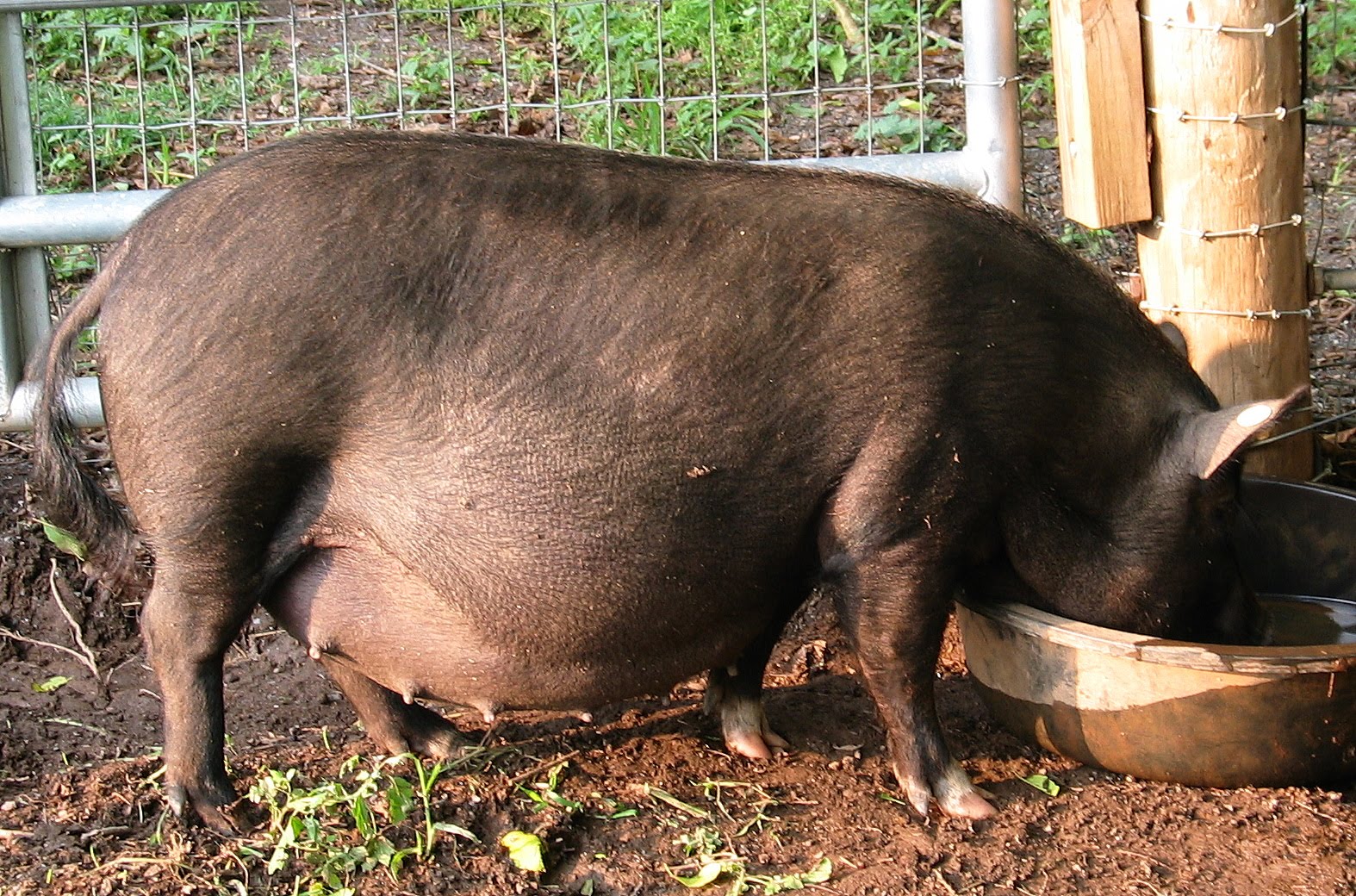
I posted a photo of our Guinea hog sow Cerridwen when she was three weeks to her due date.  Now, for comparison, here's what she looks like this morning, with only four days left before her piglets are due.

Now that she's closer to her due date, do we have any more guesses as to when the piglets will be born, and how many there will be?

Friday, August 20, 2010

100% Factory-Free: Handspun, Handwoven Quilt Project (Part 1)

I'm starting a new, major project today!

A friend of mine has placed an order for a custom-made, handspun, handwoven quilt.  I'm pretty excited about doing this because it will be my first of what I hope will be many more large projects creating beautiful, practical, and durable goods from my farm that are 100% factory-free.  I've done lots of other smaller projects (jewelry, purses, etc.), but nothing approaching the scale of an entire queen-sized quilt.

By factory-free, I mean that EVERY material used has been grown on my farm, and EVERY step of the processing, from raw material to finished product, has been done by me, here on the farm, by hand.  How often do you have the opportunity to own an entire quilt that has never, at any point, passed through a factory?

The quilt will be made of wool from my own flock of Icelandic sheep.  I shear the wool myself, then wash, dry, pick, card, spin, ply, weave, and stitch it.  I estimate that this quilt will contain more than 3 miles of double-ply yarn (which means that I spin 6 miles of single-ply yarn, then spin it back on itself to make it two-ply, a total of 9 miles of spinning).

The quilt squares will be individually woven by hand on my set of Quilt Weaver looms from Hazel Rose Looms.  Then the squares will be assembled into the Maple and Oak Leaf pattern I designed.  The colors will be the natural colors of the sheep, so no dyes will ever be used on this quilt.


I expect this project to take me a few months to complete.  I'll post updates here periodically, to show how it's progressing.

Today, I'm starting with the very first step:  Choosing the wool.  My customer wanted his quilt made from lamb's wool, which is a little more expensive, but it's softer than the wool of an adult sheep.

One of the fun things about getting a custom quilt direct from me is that you get to see the sheep who provided the wool.  Here are the sheep who gave their lamb fleeces for this quilt:

Urbana:

Wish:
Ulanova:

Windsor:

I don't have any of the beige colored lamb's wool in my inventory at the moment, so that will come from my fall shearing, in October.  It will probably come from this handsome lamb:

Xenophon:

Next step:  Preparing the wool.  Stay tuned!

Wednesday, August 11, 2010

Pretty Sheep

I've been spending the past few days trying to get new photos of all of my lambs to update my sales list as well as some new shots of some of the adult sheep to update my web site.  I haven't gotten them all yet, but I've gotten a few nice shots along the way.  Enjoy!

I think Rhonwen looks like a supermodel with her hair being blown by a wind machine in this one.  Her fleece is SO silky soft.


Paris and Xanadu.  Here's what Xanadu looked like as a baby.

Sapphire is one of my favorite ewes.

I've had Tawny for almost a year now.  It's about time I took a good photo of her.  She's such a pretty girl.  I love her long sweeping horns and her regal look.

Remember little Wish, the cutest lamb of all time?  She's a year old and all grown up!

Remember Xander, the lamb in the Unidentified Flying Lamb Pod?  Here he is now.

Xelene still hasn't lost her knack for always striking a picture-worthy pose.

Xcaliber seems to be putting all of his growth into horn size.  Those are some huge horns for a little guy!

Sometimes, it's fun to compare pictures to see how much the lambs change as they grow.  Other times, like these three pictures of Xanti, it's fun to see that she looks exactly the same!

This is Xenophon.  Photos can't do justice to how handsome this ram lamb is.  Every time he walks by, I just stop what I'm doing and stare at him.  For three years, I've been trying to breed a ram lamb who will be worthy to replace Nicholai when he retires.  This may be the one!

Did you know that ram lambs always strike a majestic pose when they're peeing?  You can always get a good photo of them then.  Sorry for the invasion of privacy, Xaq, but you just looked so regal standing there!  :-)

Remember teeny, tiny Xoco, who was so much smaller than her brother when she was born?  Well, she's a big girl now!  Of course, she's still smaller than her brother Xaq (pictured above), who is HUGE.  She's also the one who ripped her horn halfway out of her head.  As you can see below, it re-set itself and is growing in just fine.

Every once in a great while, we have lambs that get their ear tags caught on things and end up pulling the tags out, down through the ear.  Xummer is the first one we've had who managed to pull her tag out SIDEWAYS through her ear.  OUCH!  That must have hurt!  Now she has a very distinctive look.